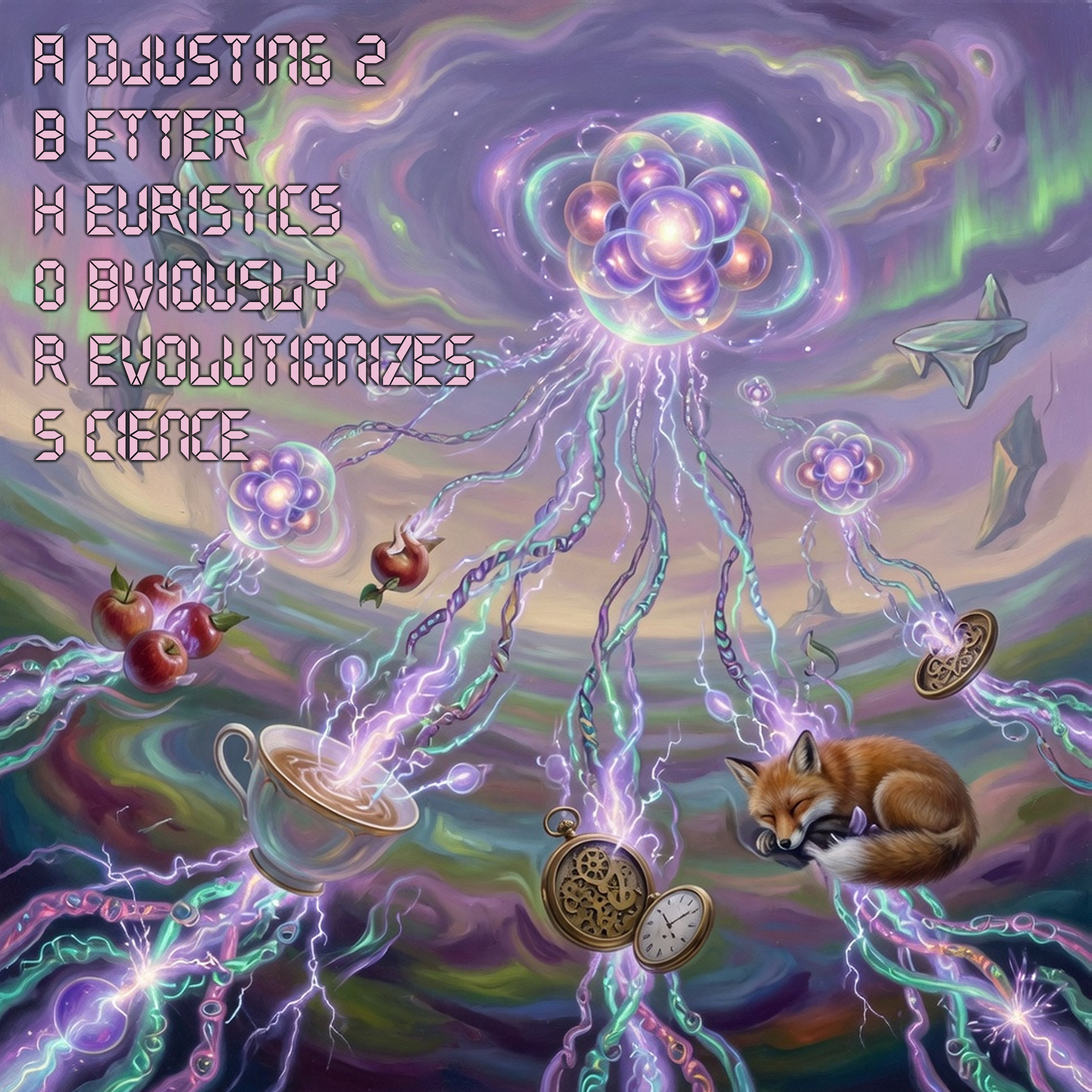
They say: "Nature Abhors a Vacuum", but is that concept a pull or a push? Traditional science claims gravity is a pulling force, which brings masses together, but then it is opposed to the expanding force that makes the universe grow. What if that idea was incorrect? What if every part of the universe is being pushed apart in the very same manner?
In Uniphics, gravity is not a standalone attractive force (as in Newtonian physics) or spacetime curvature (as in general relativity). Instead, it is a secondary, emergent "pushing" effect arising from the same underlying dynamics as electromagnetism. Electromagnetism comes first at the basic level: It arises directly from spin-wave disturbances created by gyrotrons (spinning particles) in the ξM-field. These massless spin waves propagate through the field and reproduce all electromagnetic phenomena — Coulomb's law, Maxwell's equations, the electron g-2 anomaly, optical effects, etc. — with high precision, replacing the need for photons. Electric and magnetic fields emerge from ξM-field gradients and spin orientations, corrected by time-flow variations.
Gravity emerges from the same ξM-field via energy-density gradients: Bound matter (gyrotrons) increases local energy density (E_d) and slows time flow. The unbound energy in the ξM-field repels itself (or seeks balance via negentropy — the drive toward maximum stability/spread). When two masses are near each other:Their combined energy fields create a low-density void between them (because the fields interact and partially cancel or redistribute). Higher energy density outside the pair then pushes the two masses toward each other to fill the low-density gap and restore balance.
This creates the illusion of an attractive pull, but it is actually a pushing force from the outer high-density ξM-field, analogous to how pressure differences push objects together in fluid dynamics (or like the Bernoulli effect for charge, but here driven by bulk energy density rather than spin quanta alone).
BACK  HOME