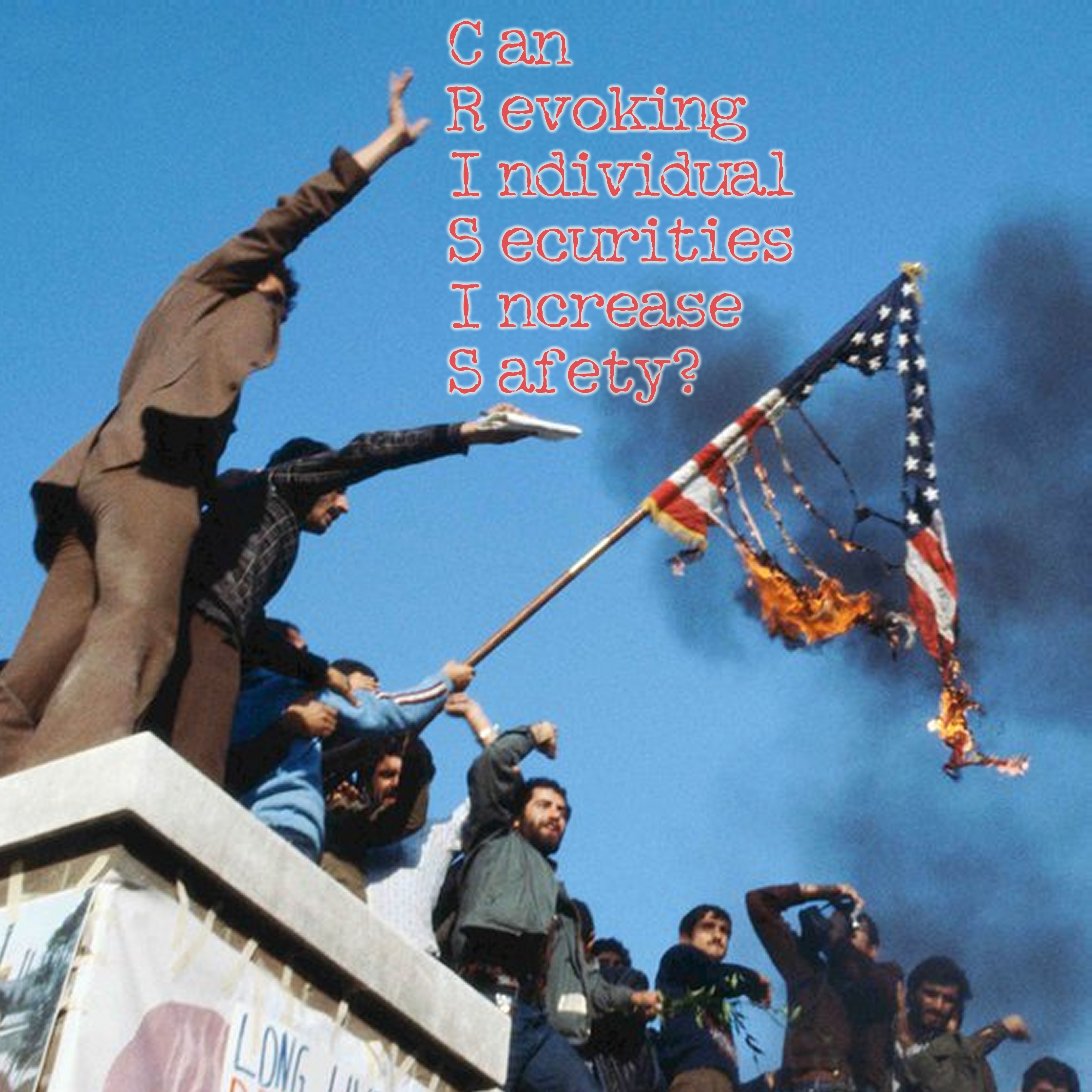
“Crisis? What Crisis??” It looks like for the past 6 years we have had one crisis after the next. Covid, Ukraine, Election cheating, Trump being worked against every single moment, Biden being a puppet on strings that cannot even sign his own executive orders. And then there are the terrible crimes against children, which fortunately many humans won't let us forget until those responsible are properly punished. The main point of discussion here is whether it should be life in prison, or immediate execution after a military court, for crimes against humanity.
Can revoking individual securities increase safety? This question feels like it’s been hanging over our heads for a long time. We’ve seen how systems built on trust can be manipulated, how laws can be twisted to serve power rather than protect people. When we talk about safety, we’re not just talking about protection from violence or harm. We’re talking about the kind of safety that comes from knowing that the institutions we rely on are honest, accountable, and fair. But how do we make sure that’s the case? How do we ensure that no one can abuse the very structures meant to safeguard us?
Individual securities are like the foundation of our society. They give us a sense of stability, of being able to trust in the rules that govern our lives. But when those securities are undermined, when they’re used as tools for control rather than protection, they can become dangerous. I’ve watched as people lose faith in the system, as they see the same patterns repeat themselves over and over again. It’s not just about one person or one event. It’s about a pattern of behavior that refuses to change, no matter how many times it’s exposed.
Securities, in this context, aren’t just about financial safety or legal protection. They’re about the fundamental belief that we can live in a world where justice is possible. When that belief is shaken, when the rules that keep us safe are rewritten for convenience or power, we’re left vulnerable. I’ve felt this uncertainty in my own life, in the way I’ve had to question everything, from the news I consume to the people I trust. It’s a slow erosion of confidence, a quiet fear that nothing is as it seems.
Increase safety isn’t just about punishment or retribution. It’s about creating a world where people can live without fear, where the institutions that are supposed to protect them actually do so. But how do we get there? How do we ensure that the systems we depend on are not only functional but also ethical? I’ve been thinking about this a lot lately, about the balance between security and freedom, between control and trust. These are not easy questions to answer, but they’re ones we can’t ignore.
Safety, at its core, is about the right to live without fear. It’s about the ability to trust that the people in power are acting in our best interests, not their own. But that trust has to be earned, not assumed. I’ve seen how easily that trust can be broken, how quickly people can lose faith in a system that once seemed solid. The challenge isn’t just about finding new ways to protect ourselves. It’s about rebuilding that trust, about ensuring that the systems we rely on are transparent, just, and accountable. That’s the real path to safety, and it starts with questioning everything.
So, can revoking individual securities increase safety? I’m not sure. What I do know is that the status quo is no longer working. We’ve seen the cost of relying on systems that are designed to protect us but have instead become tools of control. The answer may not be in revoking securities, but in rethinking what they mean. Safety isn’t about locking people away or making them fear the system. It’s about creating a system that people can believe in, that they can trust, that they can live in without fear. That’s the kind of safety we need, and it starts with asking the right questions.
BACK  HOME