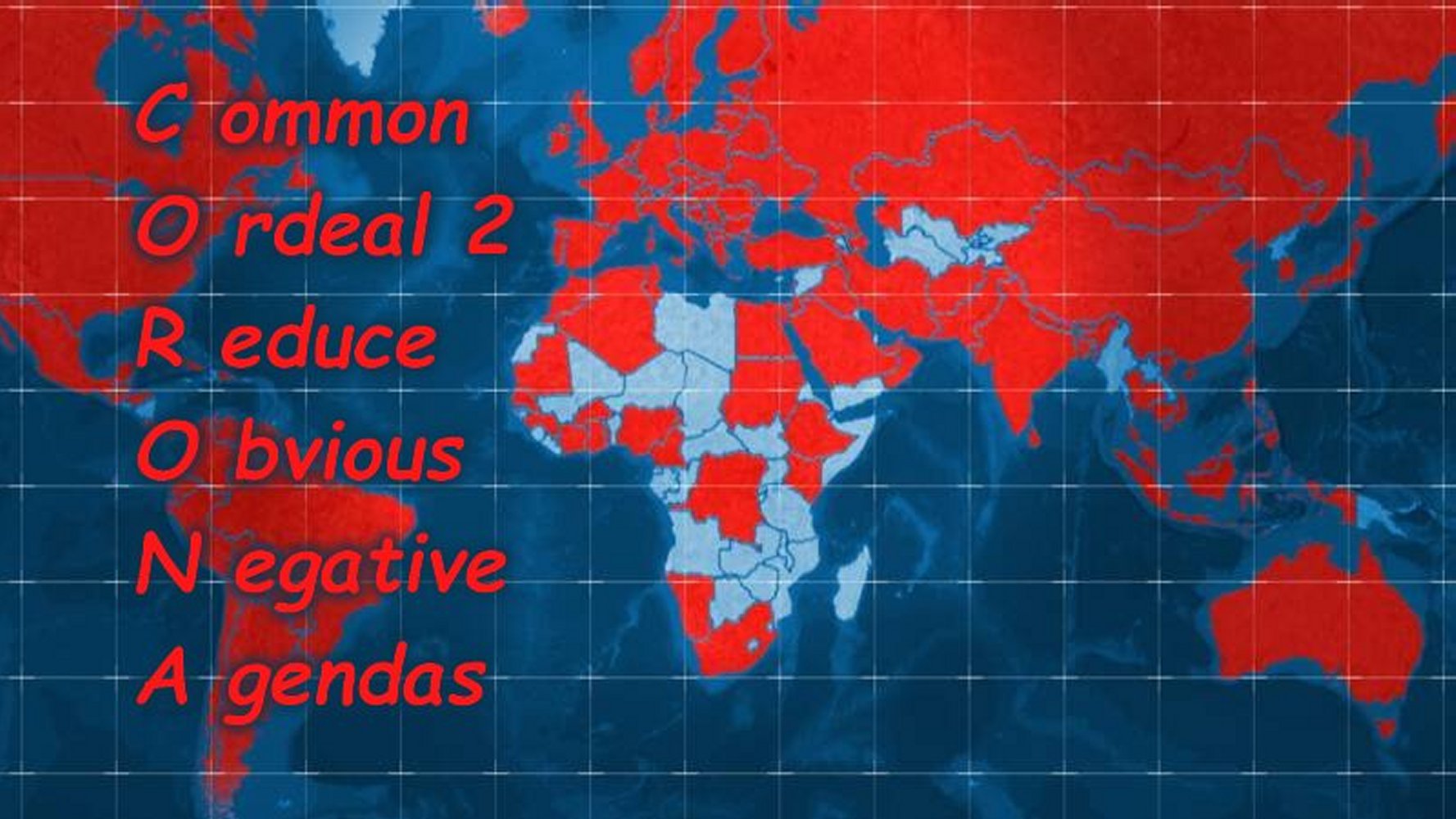
By now, the fact that Corona was an exercise in human obedience is well established. It came way too fast, had way too many ridiculous rules that were inneffective, and were even totally contradicting one another. And their "solution" was a vaccine that was rolled out without any proper testing in a ridiculously short timespan. And once many were getting the jab, the side effects kept stacking up, as well as the crazy actions people posted on the Internet. I mean Really? Dancing nurses??? Empty hospitals?
Common as it may seem, the Corona pandemic was not just a health crisis, but a moment that exposed a lot about how society functions. It was a common experience for millions, but it also revealed how easily people can be led, how quickly panic can take over, and how the line between fear and control can blur. For many, it was an ordeal that tested patience, resilience, and the very concept of freedom. It wasn’t just about keeping safe; it was about adapting, about following orders, and about losing a sense of autonomy that we had taken for granted.
Raise your hand if you ever felt like you were living in a simulation. The rules changed daily, the information was contradictory, and the narrative shifted without any clear logic. It was as if we were all being asked to play a game with no clear rules, no visible players, and no end in sight. The idea of reducing the spread of a virus turned into an elaborate performance, with masks, social distancing, and lockdowns becoming the new normal. But what was the real goal? Was it to protect lives, or was it something else entirely?
Obvious as it may be, the real issue isn’t just the virus itself. It’s the way the crisis was managed, the way it was used to justify a series of measures that felt more about control than containment. The public was told to trust the experts, to follow the science, and to accept the rules. But what if the science wasn’t as clear as we were told? What if the rules were not based on facts, but on a desire to reshape how we live? It’s a fine line between protection and manipulation, and in the chaos of the pandemic, it became difficult to tell which side we were on.
Negative consequences were not just a byproduct of the measures taken, but a direct result of the system that was put in place. People were isolated, their lives were disrupted, and their mental health suffered. The economic impact was severe, with many losing their jobs, their homes, and their sense of security. And yet, despite all of this, the narrative remained focused on the virus, the need for obedience, and the idea that all of this was for the greater good. It’s hard to ignore the fact that the negative effects were not just collateral damage, but an intentional outcome of the system that was in place.
Agendas, whether they were political, economic, or social, were at the heart of the Corona crisis. The way the pandemic was handled was not just about health, but about power, control, and influence. It became a tool to reshape behavior, to change habits, and to restructure how society functions. The message was clear: compliance was necessary, and resistance was not acceptable. The pandemic was not just a health issue; it was a test of will, a demonstration of how far people would go to follow orders, and a reminder that fear can be a powerful motivator.
Looking back, it’s hard to believe that we were ever so easily led. We were told to trust, to follow, to accept, and to endure. But in doing so, we allowed ourselves to be part of a system that was not always transparent, not always fair, and not always in our best interest. The Corona experience was an ordeal, but it was also a moment of reflection. It forced us to ask questions, to challenge the status quo, and to consider the cost of obedience in a world that is constantly changing. Perhaps the real lesson is not about the virus, but about the power of the people to resist, to question, and to reclaim our own agency.
BACK  HOME